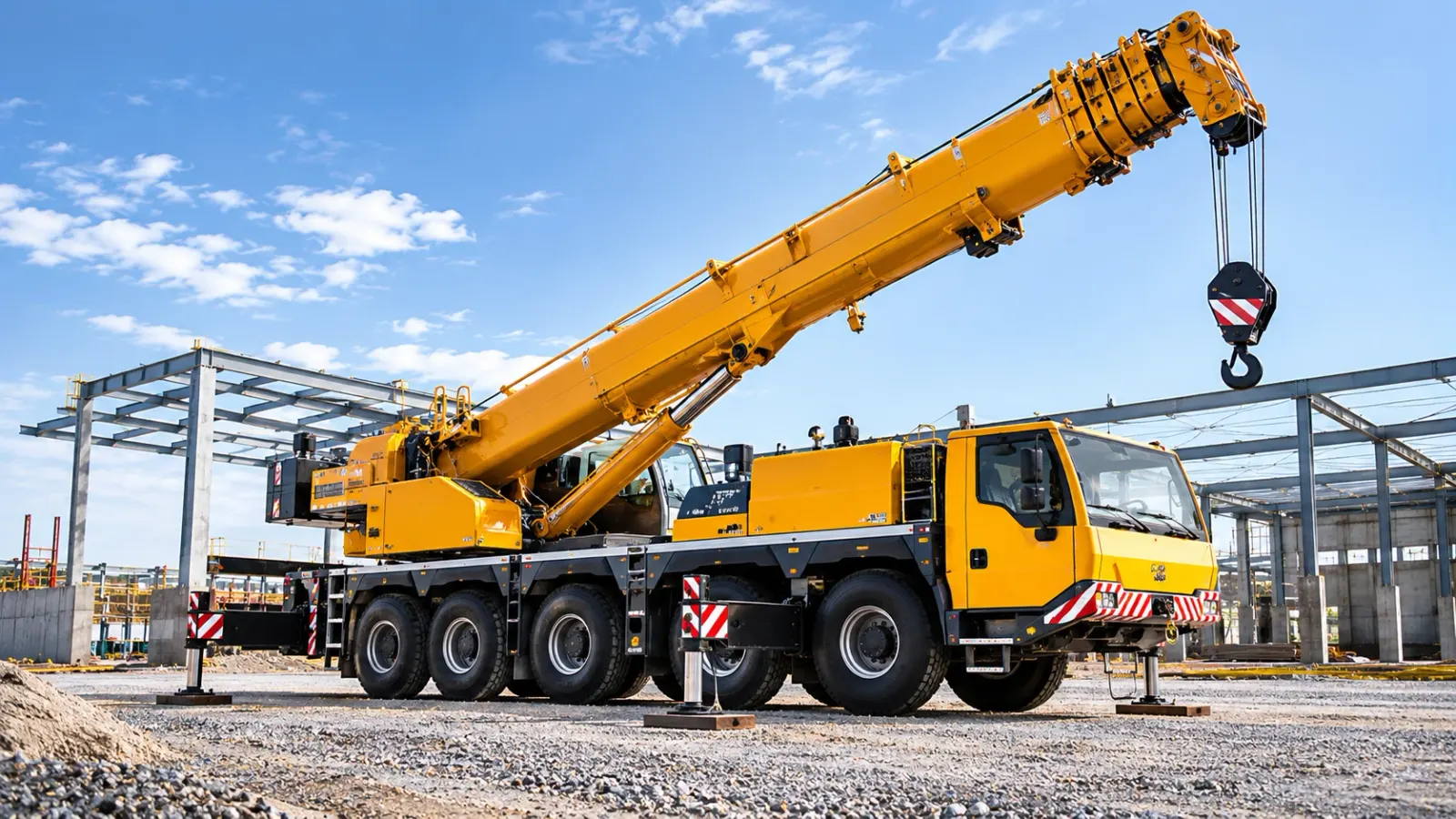
Cranes are expensive to buy, expensive to keep compliant and valuable to the right business. They are also one of the easiest assets to under-use. A machine that looks like a bargain at the quoted hire rate can look very different once you count the weeks it spends parked.
This post is about testing the buy-or-hire decision with your own numbers. It is general information, and it deliberately uses no sample rates, because hire rates and demand differ by region, crane type and season.
Hire is a price per day; ownership is a price per month
The first step is to put both on the same footing. Hire is charged by the day or hour, usually with a minimum, plus extras such as transport, operator and standing time. Ownership is a monthly fixed cost that you pay whether the crane works or not.
For ownership, add up what you would pay in a typical month:
- the repayment, or the capital cost if you pay cash
- insurance, registration where applicable and storage
- scheduled inspections and servicing
- the operator's wages or the cost of keeping a licensed person on call
- tyres, wire rope and other wear items spread over their life
- a reserve for unplanned repairs
Divide that monthly total by the number of days you realistically expect to bill the crane. That gives you a break-even day rate. If hiring a comparable crane costs less than your break-even rate, hiring is cheaper on those numbers. If you could bill the crane out at more than the break-even, ownership begins to make sense.
Utilisation is the honest question
A break-even rate is only as good as the days estimate behind it. Look at your last year of jobs and count the days you actually needed a crane, not the days you wished you had one. Then ask:
- Is the work steady or lumpy? A run of big jobs followed by weeks of nothing changes the maths.
- Could you sell spare capacity to other contractors, and are you set up to manage the bookings, travel and paperwork that involves?
- What happens in the slow months to the repayment?
Idle weeks are the hidden cost. They do not appear on a hire invoice, but they dominate the economics of a crane you own.
Operator availability matters as much as the machine
Operating a crane typically requires a person who holds the appropriate high-risk work licence, and the class needed depends on the crane type and capacity. Ask your state or territory regulator what applies to the machine you are considering, and think about what happens when your one licensed operator is sick, on leave or leaves for another job.
A crane that cannot be operated is a repayment with a hook on it. Options include training additional staff, relying on dual-hire (machine with operator), or keeping a relationship with a labour-hire provider. Each has a cost that belongs in your comparison.
Dual-hire and wet-hire change the picture
Many hire arrangements include the operator. If you own the crane but hire in an operator as needed, or hire a crane with its operator for a job, the cost structure shifts again. Compare like with like: a dry hire rate and a wet hire rate are not the same thing, and neither is directly comparable with your own operator's wages and on-costs.
The case for owning
Ownership tends to be easier to justify when:
- You have a steady base of work that you cannot reliably hire for at the times you need.
- Availability is a competitive advantage, such as being able to start at short notice.
- You can keep the crane busy across slow periods by selling it to other contractors.
- You have the staff, systems and storage to run it properly.
It tends to be harder to justify when demand is irregular, when your lifting work is incidental to the main business or when the only reason is that hiring feels annoying.
Where finance comes in
If the case stacks up, the structure of finance should fit the way the crane earns. Fixed repayments against an uneven income need a buffer. A short chat with a finance provider such as Fast Funding can show how term and structure change the monthly figure, and it is free to enquire with no obligation. Always compare the total cost of each option rather than just the repayment.
General information only. This is not financial, credit or tax advice and does not consider your situation. Speak to a licensed professional and your accountant before deciding.