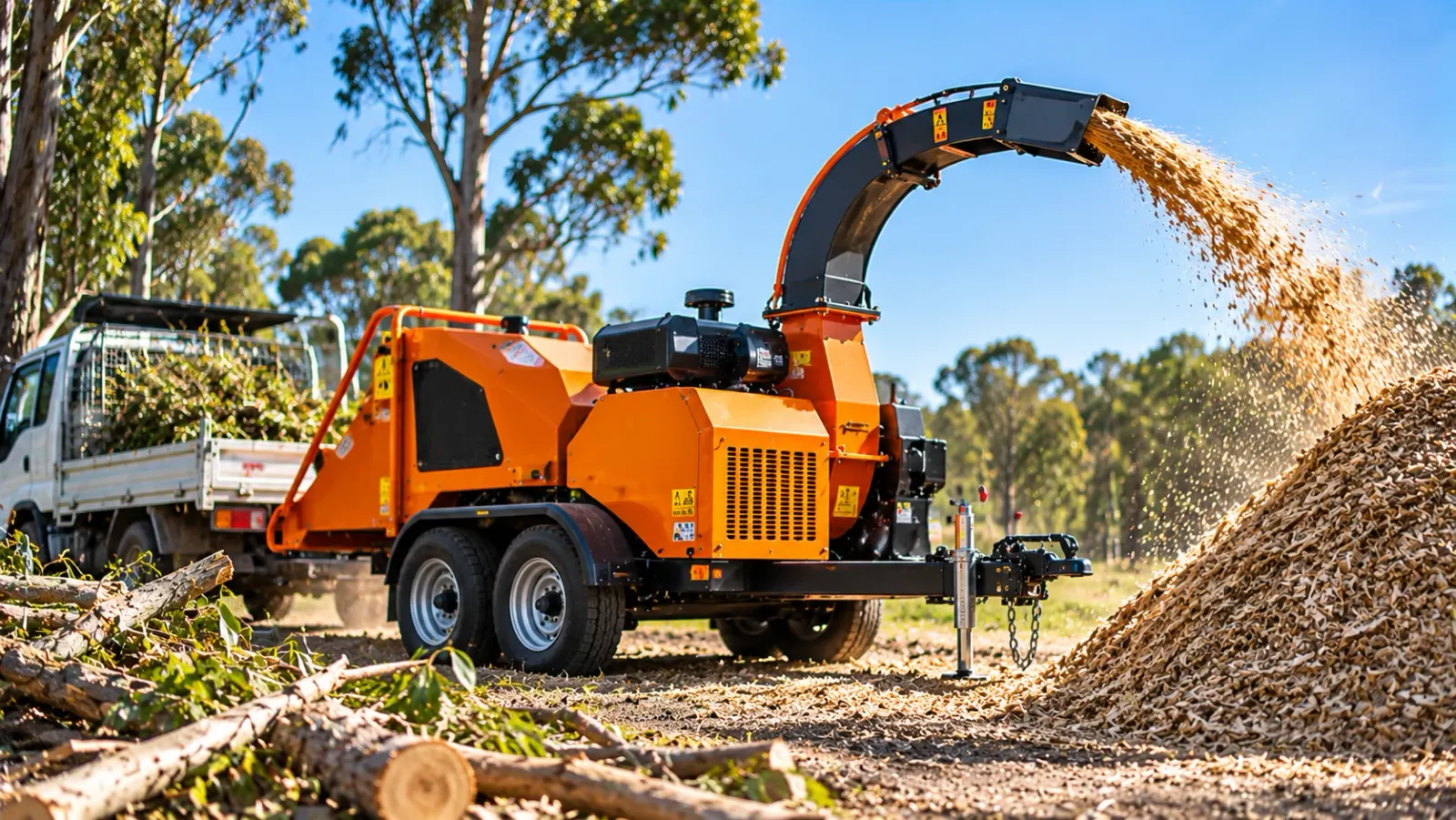
Almost every tree and land-clearing business starts out paying someone else to do the chipping, or hiring a machine by the day. At some point the bills for that start to feel large, and the question arises: would we be better off owning?
Sometimes yes, sometimes no. The honest answer depends on how steady your work is, how much of it needs chipping and what else the money could do. This post sets out a simple way to test it. It is general information and uses no figures of its own, because yours are the ones that count.
Start with what you actually pay now
Pull the last twelve months of records and add up every dollar spent on chipping or mulching, including:
- hire charges and subcontractor invoices
- transport of the hired machine and any call-out or minimum charges
- time lost waiting for the hire machine to arrive or be collected
- jobs you declined or lost because you could not chip on the day
The last two are easy to miss. A crew standing around waiting on a delivery is paying wages for nothing, and that cost belongs in the comparison.
Then price ownership honestly
Owning a chipper or mulcher means paying for more than the machine. Build a cost per month that includes:
- Repayment, or the cost of the capital tied up if you buy outright.
- Fuel, knives, belts, filters and other regular consumables.
- Servicing, and repairs when something wears out or is damaged by contamination in the feed.
- Insurance and registration of the machine or its trailer where applicable.
- A suitable tow vehicle, and the labour to operate the machine safely.
- Storage and security.
Then add the cost of downtime. When your own machine breaks, you have no hire company to call, and the job waits.
The utilisation test
The core question is how many days a month the machine would actually work. A chipper that runs most weeks can pay for itself. One that works a few days then sits is a repayment with an engine attached.
Be realistic about seasons. Many tree and clearing businesses see busy periods around storms, growth seasons, fire-hazard preparation and development work, then quieter spells. Your own diary is the best evidence. If you can see steady chipping demand across most of the year, ownership looks stronger. If demand arrives in bursts, hiring for the peaks may stay cheaper.
Contract rates versus owning
Some operators find a middle path: own the machine and also take in chipping or mulching for others when their own work is slow, charging a day rate. That can lift utilisation, but it also adds obligations: scheduling, travel, safe-work responsibilities and the risk of working on unfamiliar sites. Think carefully about whether you want to run a second business inside the first.
Machine size and engine hours
If you do buy, match the machine to the material you actually cut. A unit sized for brush behaves differently from one built to take whole logs. Buying too big means higher running costs per hour; buying too small means the machine runs flat out and wears faster.
Engine hours are a useful indicator of use, but they do not tell the whole story, since a chipper can work hard at high revs or idle for long periods. Pair the hour reading with service records and a physical look at the knives, rotor and feed system.
Where finance fits
If the numbers favour owning, structure matters. Repayments should be something your steadiest months can carry, not just your busiest. Ask a lender or broker how repayment timing, term and any end-of-term balance would affect your cash flow, and compare the total cost rather than just the instalment. For independent explanations of borrowing basics, ASIC MoneySmart is a good starting point.
A one-page decision
Write down, side by side, your annual cost of subcontracting and your annual cost of owning, both with the downtime included. If ownership wins by a clear margin, and you have the work to support it, the case is real. If it wins only when you assume a perfect year, hire again and revisit in six months.
General information only. This is not financial, credit or tax advice and does not consider your situation. Speak to a licensed professional and your accountant before you decide.