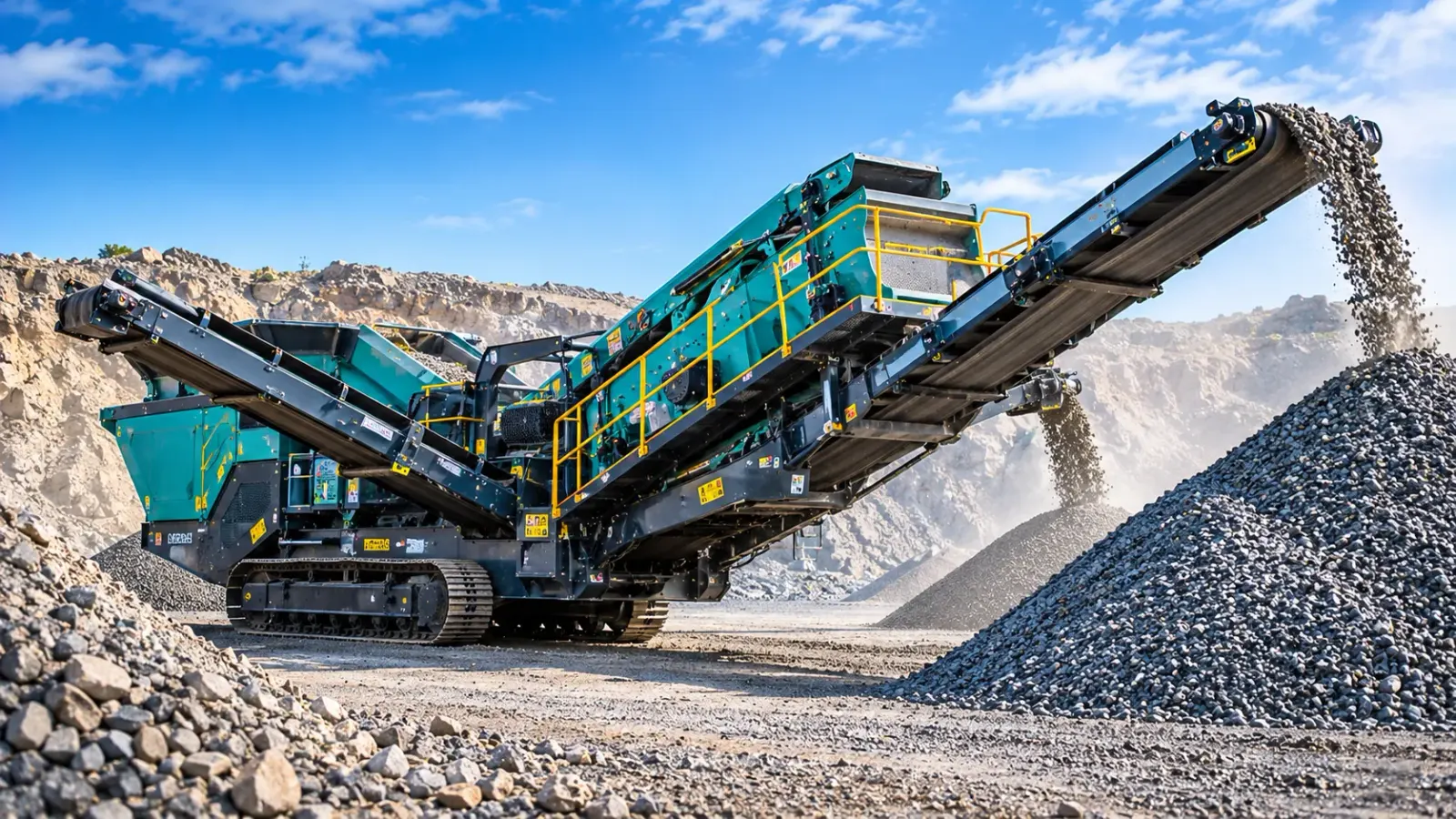
A tracked crusher or screener has two kinds of cost. One is the repayment, which is set when you sign. The other is the cost of the machine consuming its own components, which depends on what you feed it, how hard you run it and how well it is looked after. Buyers who focus only on the first tend to be surprised by the second.
This post is general information. It gives no figures for your machine, because wear varies enormously with material, settings and operator habits. Ask your supplier, and look at your own records, for numbers that fit your work.
What actually wears
Crushing and screening plant is built to be consumed in specific places. Typical wear and consumable items include:
- Crushing surfaces. Jaw plates, cone liners, impact blow bars and similar parts take the direct hit of the material.
- Screen media. Mesh, panels and decks wear, blind or tear depending on the feed.
- Conveyor belts, skirts and rollers. Abrasive material wears belts and seals, and spillage tends to accelerate the damage.
- Hydraulics and track gear. Tracks, rollers and hoses see constant vibration and dirt.
- Engine and filters. Dust-heavy environments shorten filter life and change service intervals.
None of this is unusual. The point is that it should appear in your cost model as a line item, not a surprise.
Rock type changes everything
The same machine can have very different running costs depending on what goes through it. Abrasive, hard material wears parts faster than softer material. Clean, well-graded feed behaves differently from contaminated feed containing steel, clay or unprocessed demolition waste. If you are moving from one material to another, assume your old wear experience does not transfer until you have measured the new one.
That is why seasoned operators track wear against tonnes processed rather than calendar time. Whatever unit you use, record it consistently. Over a few jobs you build a picture of your own cost per tonne for wear parts, and that is a far better planning number than anything in a brochure.
Building it into a quote
When you price a crushing contract, the rate per tonne has to cover more than fuel, labour and repayment. A reasonable structure looks like this:
- Fixed costs per month: repayment, insurance, registration where applicable and storage.
- Operating costs per hour: fuel, operator, loader or excavator support.
- Wear costs per tonne: your best estimate of parts and consumables consumed.
- Move-in and move-out: float, set-up and any site establishment.
- A contingency for the unexpected breakdown.
If any of those are missing from the number you quote a client, you are absorbing them. Sometimes that is a deliberate choice. It should not be an accident.
Used plant and the wear that is already used
When buying second-hand plant, ask how much life is left in the major wear parts. A machine with fresh liners and a new screen deck has a different true price from one that needs them all replaced in the first month. Ask the seller what was last replaced, when, and on what basis, and have an independent inspector look at the parts rather than relying on the description.
It is also sensible to ask whether replacement parts are readily available in Australia, how long they take to arrive and who supplies them. A cheap machine with slow parts supply can cost more in downtime than it saved on purchase.
Where finance fits
Some lenders will include certain extras in a finance amount, and some will not. That depends on the lender, the structure and the item, so ask. You might find that financing the machine and funding the first set of spares from working capital is the cleanest approach. It is a conversation worth having with a finance provider such as Fast Funding and with your accountant before you sign.
Whatever the structure, aim for repayments you can still carry when a wear-heavy month lands on top of a quiet one. The question is not whether wear costs will come, only when.
A simple habit that pays
Keep a one-page log for each machine: date, hours or tonnes since the last change, what was replaced, where the part came from and what it cost. After a handful of entries you will see patterns. You will know which jobs were expensive on parts, and you will price the next one with evidence.
General information only. This is not financial, credit or tax advice and does not consider your circumstances. Speak to a licensed professional and your accountant before deciding.